
Bank Of Canada Holds Rate At 2.25% As It Looks For Signs Of A Sustainable Recovery
On July 15th, the Bank of Canada announced that it is keeping the overnight rate unchanged at 2.25% - the level it’s been at since October 2025. The Bank in its press release described Canada’s economy as “showing signs of improvement,” stating that growth is beginning to pick up while inflation is expected to ease gradually from its recent increase. At the same time, it acknowledged that uncertainty remains high because of US trade policy and the continuing conflict in the Middle East.
Bank’s more positive language is based mainly on the expected economic change between the first and second quarters. GDP declined by 0.1% at an annualized rate in Q1, while the Bank estimates that it grew by 2.5% in Q2. The Q1 number has already been reported, while the full Q2 result has not. Inflation and labour market data give the Bank reasons to remain cautious. Inflation rose to 3.2% in May because of higher gasoline prices, but inflation excluding gasoline remained closer to 2%. Unemployment was 6.5% in June, hiring remained subdued, and the economy was still operating below capacity. The Bank also lowered its 2026 growth forecast from 1.2% to 0.7%, before projecting growth of 1.8% in both 2027 and 2028. The Bank expects conditions to improve, but only after a weaker year.
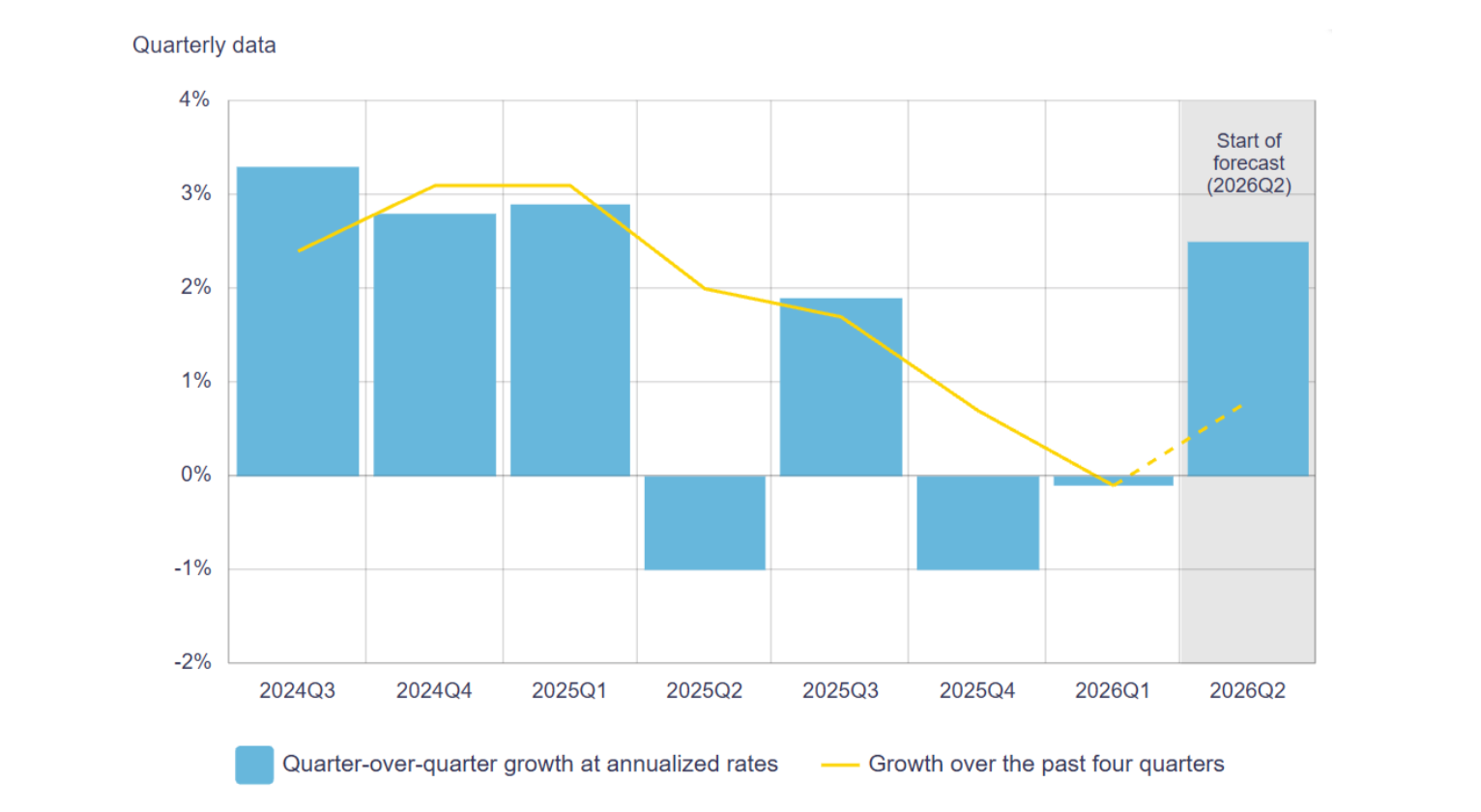
Source: Bank of Canada Monetary Policy Report—July 2026—Canadian economy - Quarterly GDP Growth Change
The chart below helps explain why the Bank expects growth to improve in the second quarter. In Q1, consumer spending was the main source of support, while weaker housing activity, lower government spending and softer exports weighed on the economy. For Q2, the Bank expects a broader improvement, with consumer spending remaining positive and government spending, business investment and housing all contributing to growth. Exports are also expected to provide a significant boost, although most of that increase is offset by higher imports and changes in inventories. The projected rebound partly reflects temporary factors from Q1 reversing, including lower government spending, auto plant shutdowns and weaker oil and gas investment.
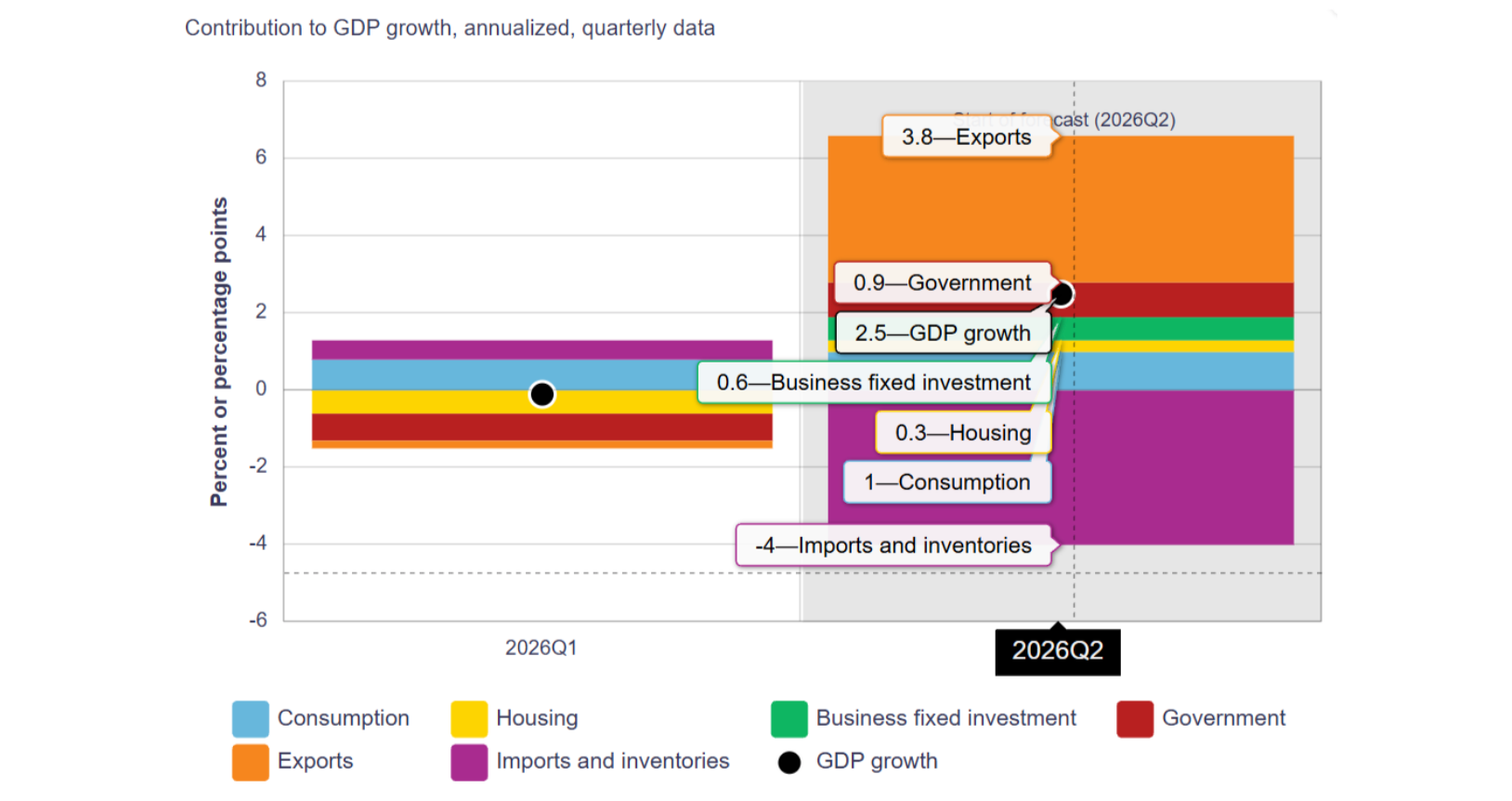
Source: Bank of Canada Monetary Policy Report—July 2026—Canadian economy - Contribution to GDP Growth
Looking ahead, Bloomberg’s WIRP data show that markets have not priced in a clear Bank of Canada rate increase before the end of the year. The probability of a 25 basis point increase rises from 13.1% in September to 19.9% in October and 40.7% in December, but remains below 50% at each meeting. In the United States, the highest probability of a 25 basis point increase is 44.2% in September, followed by 36.1% in December. This suggests that markets see some risk of higher rates in both countries, but no firm expectation that a move will occur. If US rates rise while Canadian rates remain unchanged, the wider interest-rate gap could put additional pressure on the Canadian dollar. These expectations will continue to shift as new data on inflation, growth, employment, energy prices and US trade policy becomes available.
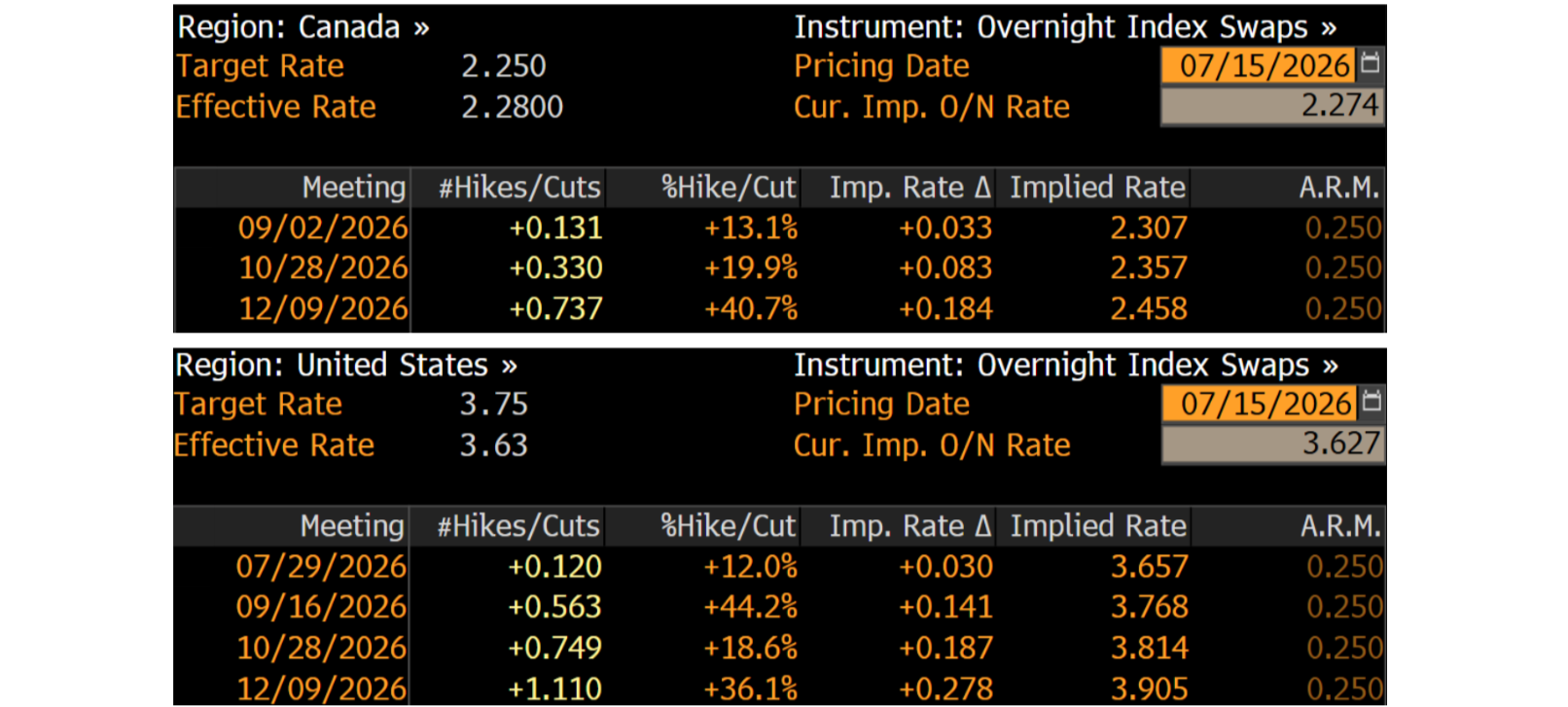
World Interest Rate Probability - Source: Bloomberg - July 15, 2026
If you would like to discuss how these developments could affect your portfolio, please contact us at 604.643.0101 or cashgroup@cgf.com.
Book a meeting today with our of our advisors: https://calendly.com/cashgroup-cgf
Market Updates
Our market commentary breaks down the latest business, financial and money news. If you’d like to receive all of our market update emails, send us an email by clicking the subscribe button. If you found this content helpful, share it widely!