
Fed Resumes Rate Hikes as Inflation Remains Elevated
On September 16th, the US Federal Reserve raised its target range for the federal funds rate by 25 basis points to 3.75%–4.00%, marking its first rate increase since 2023. The decision comes at a time when inflation remains above the Fed’s 2% target, economic activity continues to expand at a solid pace, and unemployment remains relatively low. At the same time, geopolitical tensions in the Middle East have contributed to higher energy prices, adding another layer of uncertainty to the inflation and economic outlook.
In August, US inflation remained elevated at 3.4%, with energy prices up 16.3% from a year earlier and gasoline prices up 27.4%. At the same time, the US economy continues to grow, although at a slower pace. Real GDP increased by an annualized 1.5% in the second quarter, down from 2.1% in the first quarter. Consumer spending, investment, and exports continued to increase, while government spending decreased and higher imports weighed on overall growth. These figures show an economy that is still expanding while inflation remains above target, which helps explain the Fed’s decision to raise rates in an effort to bring inflation back toward 2%.
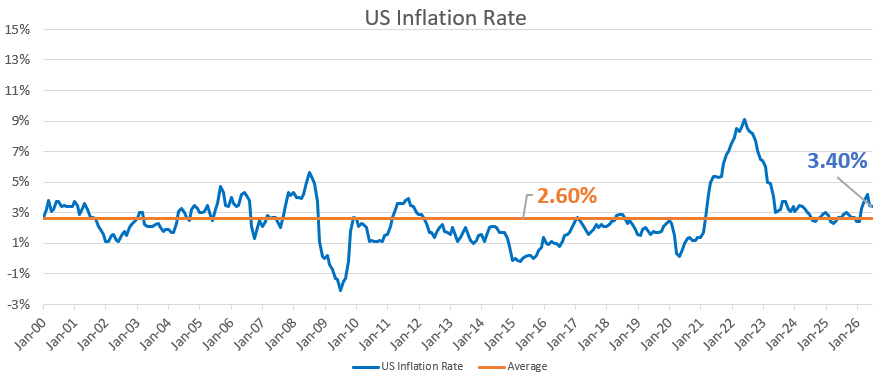
Source: U.S. Bureau of Labor Statistics: Data from 01/01/2000 – 09/16/2026
The labour market has also remained relatively stable. Nonfarm payroll employment increased by 162,000 in August, compared with an average monthly gain of 31,000 over the previous 12 months, while the unemployment rate remained unchanged at 4.1%. Average hourly earnings increased 3.1% from a year earlier. This is consistent with the Fed’s assessment that job gains have kept pace with growth in the workforce and that unemployment has changed little. However, today’s rate increase will also tighten financial conditions, and higher borrowing costs can influence household spending, business investment, and employment over time. The extent and timing of those effects will depend on how financial conditions and the broader economy evolve.
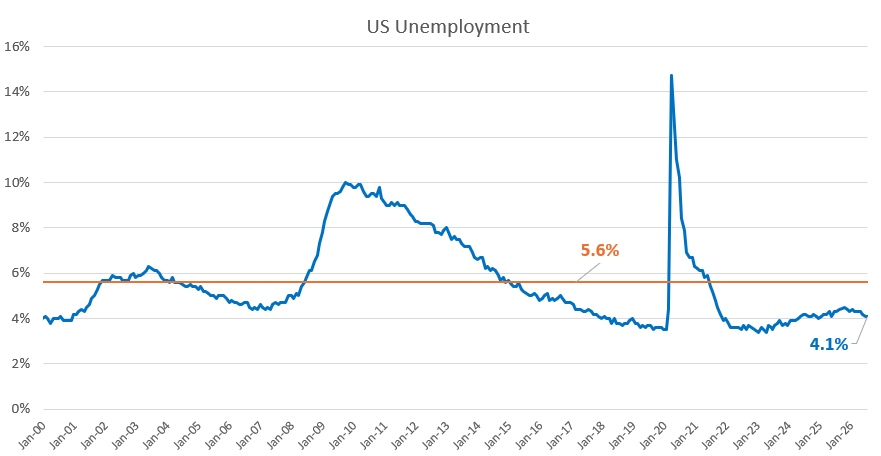
Source: FRED: Data from 01/01/2000 – 09/16/2026
Geopolitical developments remain an important risk to the outlook. The Fed specifically noted that uncertainty remains elevated partly because of global developments, while higher energy prices have already contributed to inflation. Rising fuel and transportation costs can increase expenses for both households and businesses and, if sustained, could make inflation more persistent. At the same time, domestic spending has remained resilient, productivity growth is strong, and capital investment remains robust. The Fed therefore faces a combination of persistent inflation, continued economic growth, and external risks that could affect both inflation and economic activity in the months ahead.
For Canadian investors, one of the most important consequences of today’s decision is the widening gap between US and Canadian interest rates. With the Fed’s target range now at 3.75%–4.00% and the Bank of Canada’s overnight rate at 2.25%, US policy rates are now 1.50 to 1.75 percentage points higher. All else being equal, a wider interest-rate gap makes short-term US-dollar investments relatively more attractive and can put downward pressure on the Canadian dollar. A weaker Canadian dollar raises the cost of imported goods and can add to inflation in Canada, while also affecting the Canadian-dollar returns of investors holding US assets. This growing divergence therefore matters not only for currencies, but also for relative fixed income opportunities and the outlook for monetary policy in Canada.
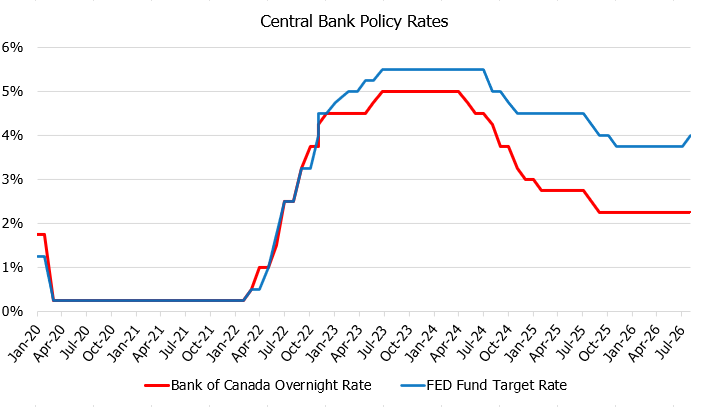
Source: FRED: Data from 01/01/2020 – 09/16/2026 and Statistics Canada: Data from 01/01/2020 – 09/16/2026
Looking ahead, market expectations remain divided on whether the Fed will raise rates again this year. Current pricing implies probabilities ranging from approximately 40% to 68% for another 25 basis point increase at the remaining meetings, while Canadian markets are also assigning meaningful probabilities to a Bank of Canada increase before year-end. These expectations have changed quickly as new economic data has become available and are likely to continue evolving. Upcoming inflation, employment, and growth reports will therefore be particularly important in determining whether today’s Fed increase is followed by additional tightening, while markets will also be watching how higher rates begin to affect consumer spending, business investment, employment, and financial conditions.
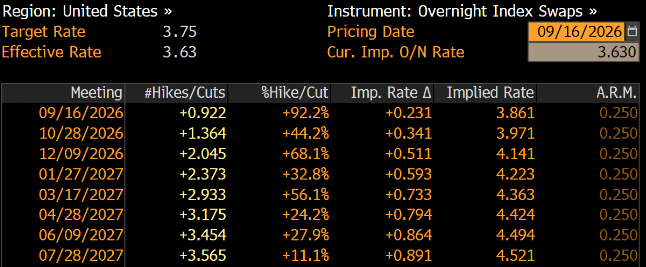
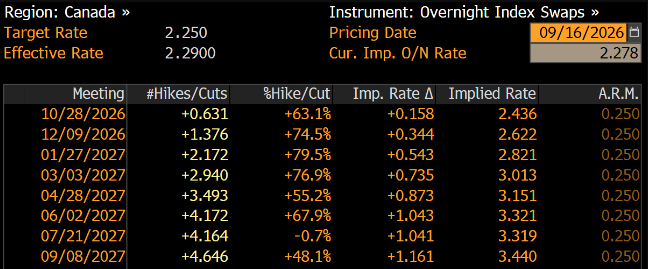
World Interest Rate Probability - Source: Bloomberg - Sept 16, 2026
If you would like to discuss how these developments could affect your portfolio, please contact us at 604.643.0101 or cashgroup@cgf.com.
Book a meeting today with our of our advisors: https://calendly.com/cashgroup-cgf
Market Updates
Our market commentary breaks down the latest business, financial and money news. If you’d like to receive all of our market update emails, send us an email by clicking the subscribe button. If you found this content helpful, share it widely!