
The Bank of Canada and the U.S. Federal Reserve announced their latest interest rate decisions on October 28, taking different approaches as both economies continue to face elevated inflation. The Bank of Canada increased its policy rate by 25 basis points to 2.50%, marking its first rate change in a year, while the Federal Reserve maintained its target range at 3.75%–4.00%, following a 25-basis-point increase in September.
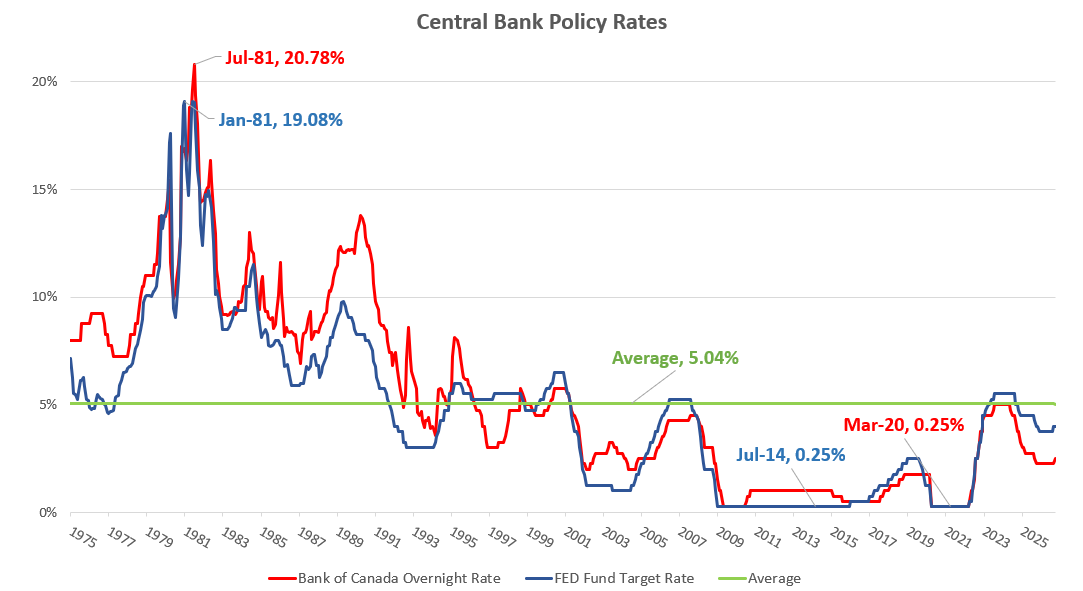
Source: FRED: Data from 01/01/1960 – 10/28/2026, Statistics Canada: Data from 01/01/1960 – 10/28/2026
In Canada, annual inflation increased from 3.0% in August to 3.1% in September, largely driven by higher energy and transportation costs. Gasoline prices rose 27.8% year-over-year, while inflation excluding gasoline declined to 2.2%, suggesting that the increase was not accompanied by a broad acceleration in consumer prices. However, persistently high energy prices are raising production and transportation costs for businesses, creating concerns that these pressures could increasingly be passed on to consumers. In its updated Monetary Policy Report, the Bank of Canada revised its inflation forecast upward, now expecting inflation to average 3% in 2027, compared with approximately 2% projected in July.
Meanwhile, U.S. annual inflation rose from 3.4% in August to 3.6% in September, also reflecting higher energy prices. However, core CPI inflation increased from 2.4% to 2.6%, indicating somewhat broader price pressures compared to Canada. The Federal Reserve acknowledged that inflation remains elevated but opted to maintain its current policy rate while assessing incoming economic data. The decision was not unanimous, with two policymakers favouring an additional 25-basis-point increase.
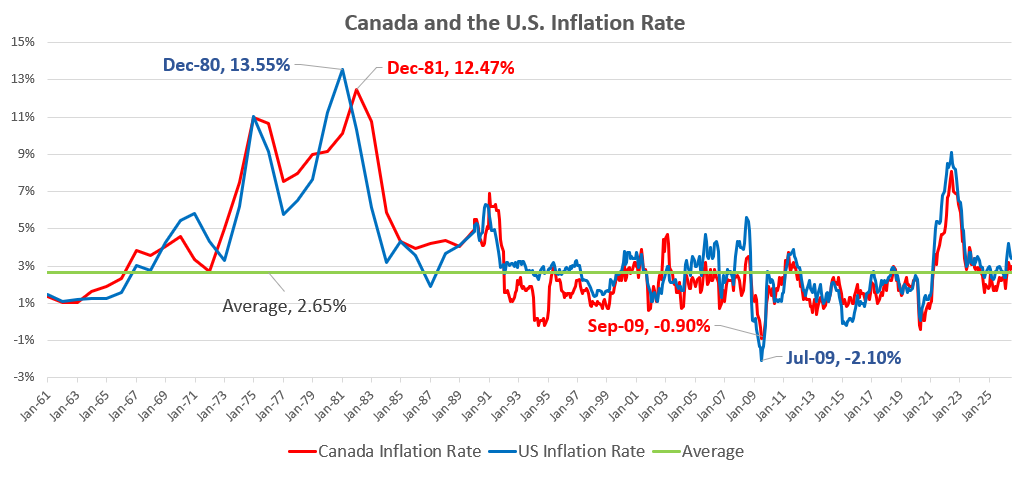
Source: U.S. Bureau of Labor Statistics: Data from 01/01/1960 – 10/28/2026, Statistics Canada: Data from 01/01/1960 – 10/28/2026
Economic growth and employment trends also presented different challenges for the two central banks. Canada's economy expanded by 3.3% on an annualized basis in the second quarter, supported by stronger consumer spending, a recovery in business investment, and improving exports. However, the sustainability of this recovery remains uncertain. Employment declined by 68,000 positions in September, following a loss of 42,000 in August, with particularly notable declines among younger workers and in the education, healthcare, and manufacturing sectors. The unemployment rate increased to 6.5%. Despite these signs of labour market weakness, the Bank of Canada noted that economic activity has been stronger than previously anticipated, with growth estimated at approximately 2% in the third quarter. Nevertheless, the Bank expects growth to slow in the final quarter of 2026 as new U.S. tariffs weigh on economic activity, before recovering in 2027.
In the United States, economic growth moderated from an annualized 2.5% in the first quarter to 2.2% in the second quarter, supported by continued consumer spending and business investment. Although growth has slowed, it remains relatively resilient. The labour market, however, is showing signs of cooling, with employers adding just 29,000 jobs in September compared with 133,000 in August, while unemployment increased slightly to 4.2%. Unlike Canada, the U.S. continues to record modest employment gains, suggesting a gradual slowdown in hiring rather than a more pronounced deterioration in labour market conditions. The Federal Reserve continues to characterize economic activity as strong, supported by robust capital investment and productivity growth.
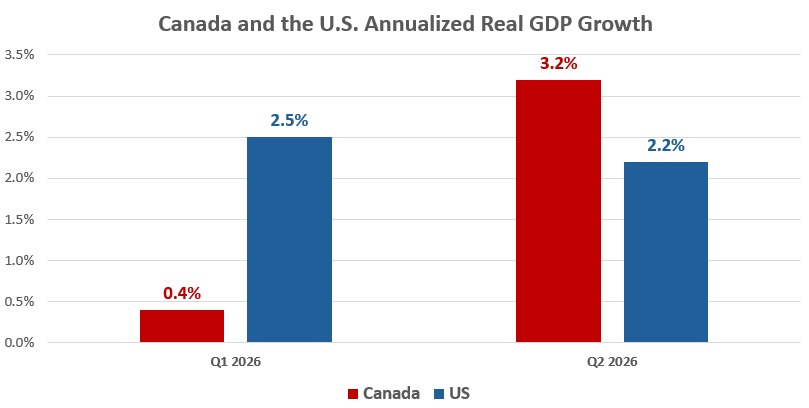
Source: U.S. Bureau of Economic Analysis: Gross Domestic Product, Statistics Canada: Gross domestic product, income and expenditure, second quarter 2026
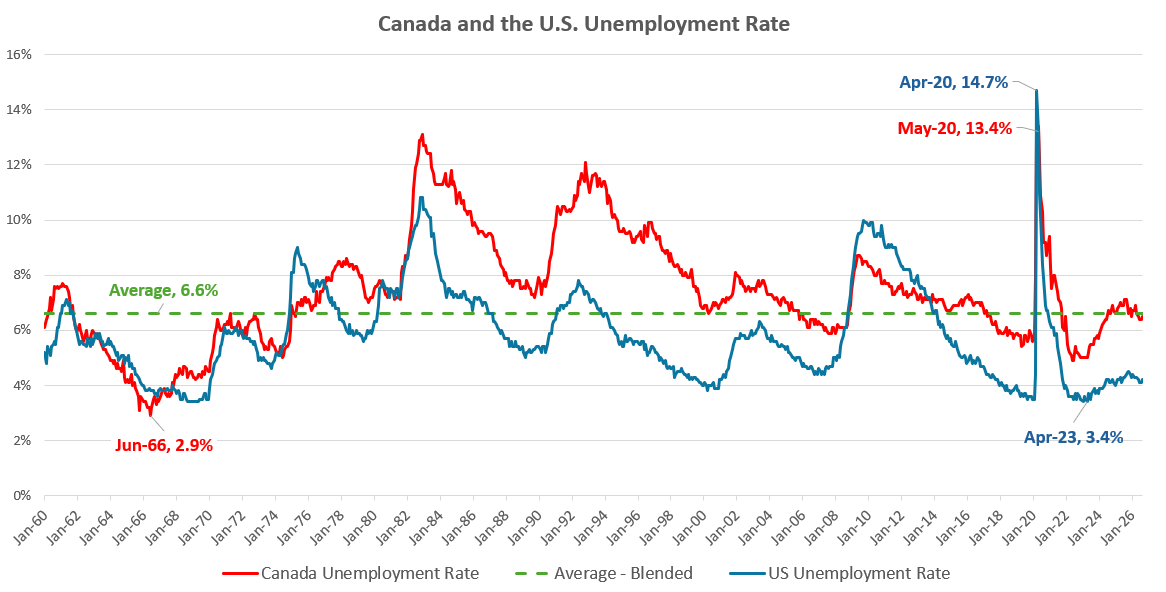
Source: FRED: Data from 01/01/1960 – 10/28/2026, Statistics Canada: Data from 01/01/1960 – 10/28/2026
Looking ahead, both central banks remain focused on returning inflation to their 2% targets, although their policy approaches currently differ. The Bank of Canada indicated that further rate increases may be necessary if elevated energy costs continue to spread throughout the economy, while acknowledging uncertainty surrounding trade relations and future growth. The Federal Reserve maintained its current policy stance as it evaluates whether inflation is moving sustainably toward its target, particularly as hiring moderates. With inflation remaining elevated in both countries, upcoming economic data will be important in determining the direction of interest rates and whether economic growth can remain resilient under tighter monetary conditions.
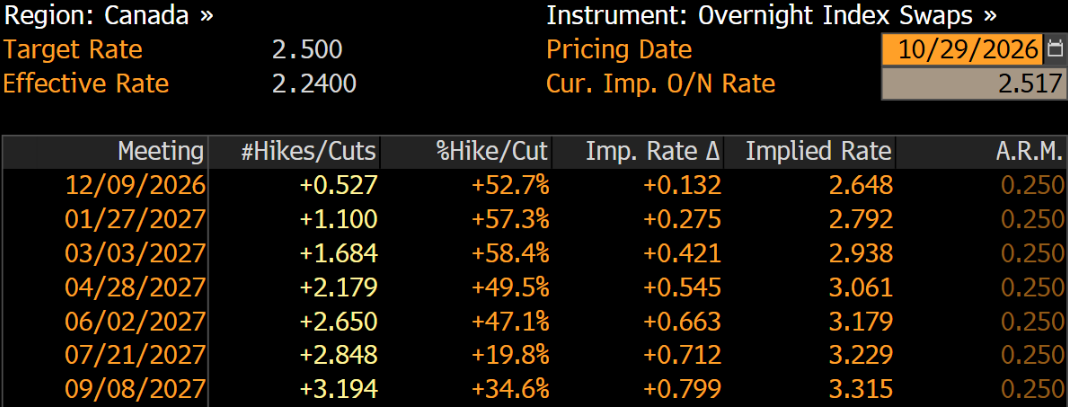
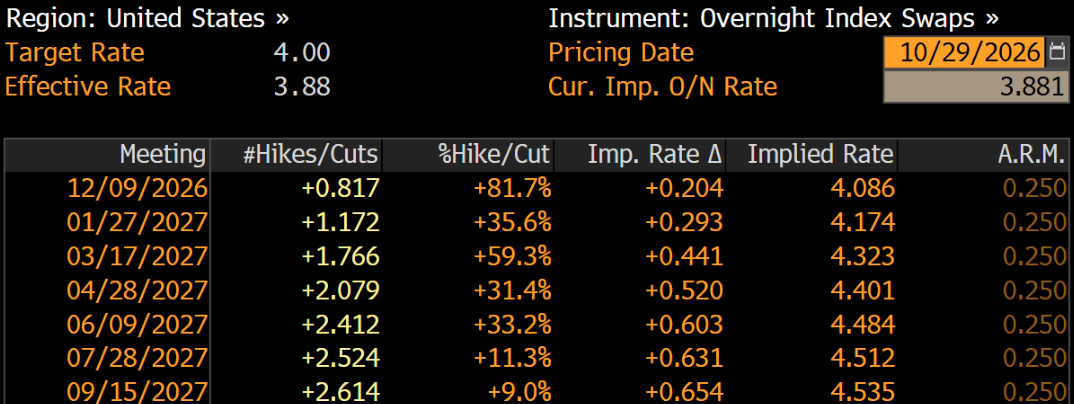
World Interest Rate Probability - Source: Bloomberg - October 29, 2026
If you would like to discuss how these developments could affect your portfolio, please contact us at 604.643.0101 or cashgroup@cgf.com.
Book a meeting today with our of our advisors: https://calendly.com/cashgroup-cgf